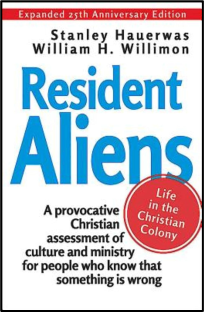
Resident Aliens - Stanley Hauerwas, William H. Willimon(1989, 197 pp.)
In this book, Hauerwas and Willimon suggest that the Church doesn’t have a social ethic, it is the social ethic. This idea is consistent with Scot McKnight’s Kingdom Conspiracy, where Christians fail by centering their social ethic outside the Church. In fact, in a blurb in the opening pages of McKnight’s book, Hauerwas and Willimon promote McKnight’s thesis:
Whether they think of themselves as liberal or conservative, as ethically or politically left or right, American Christians have fallen into the bad habit of acting as if the church really does not matter as we go about trying to live like Christians.
I kept seeing Hauerwas and Willimon referenced in my reading, and I wanted to know what makes their thinking so compelling. While their message is not new, it feels particularly relevant to our time. They introduce their work as 'a provocative Christian assessment of culture and ministry for people who know that something is wrong', an invitation to discover what has gone off course.
Hauerwas’s main contention is that since Constantine, the Christian Church has fused with the “empire” and lost its identity. It moves from being the conscience of the state to being a chaplain to power.
By simply being a community that lives out the story of Jesus through forgiveness and truth-telling, the Church is the social ethic. A Church that does not live according to loyalties to the state and to the state’s commitments to power and wealth is the gift given to the world. That contrast defines the Church as a colony reaching out to influence the rest of the world.
“I have always imagined that paradise will be a kind of library.”
— Jorge Luis Borges
List of book blurbs for May 2026
What These Books Are About
Six books this month. One question they all connect to is: who can claim authority, and how do they get it.
These books may be read in pairs. Or pick one of the pair that most appeals to you.
Selbie and Pollan look inward, at consciousness and the spiritual life, and whether science provides the final word on our perceived reality.
Hauerwas and Worthen look at what happens when politics and Christian faith run too close together.
Da Empoli and Berger each have a different emphasis: one shows how authoritarian power actually works; the other argues that asking honest questions to power can stop it.
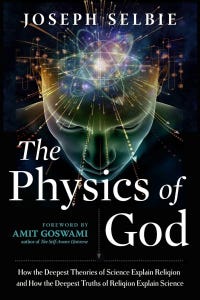
Joseph Selbie | 2021 | 240 pp. | Science & Spirituality
Selbie argues that modern physics, from quantum mechanics to relativity, points toward the same conclusions that mystics and religious traditions have held for centuries: that God is real, and not just a matter of faith. While his conclusion may be correct, his arguments are questionable.
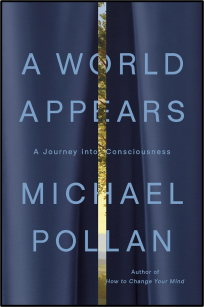
Michael Pollan | 2026 | 320 pp. | Science / Consciousness
Pollan looks at what happens to the mind under psychedelics and meditation, and what those experiences tell us about consciousness and what it means to be human.
Stanley Hauerwas, William H. Willimon | 1989 | 197 pp. | Christian Theology / Ethics
Hauerwas argues that the church went badly wrong when it tried to fit into secular culture rather than challenge it, and that Christians have always been, by their nature, outsiders in any society that doesn’t share their faith.
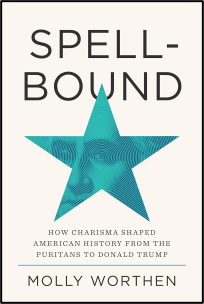
Molly Worthen | 2025 | 464 pp. | American Cultural History
Worthen shows how charisma and religious fervor have worked as political tools throughout American history, from the Puritan settlements to the Trump movement, and why we keep falling for these damaged leaders.
Theme 3: Power, Manipulation, and the Art of Questioning
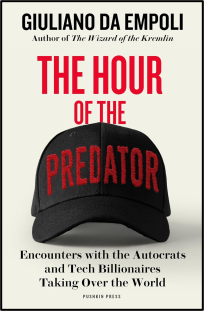
Da Empoli profiles the autocrats and tech billionaires who are remaking political power around the world, and argues that open societies are vulnerable and losing the fight against them.
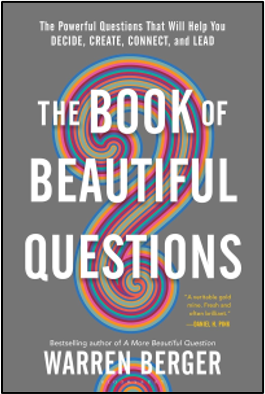
Berger argues that the best tool for better decisions, creativity, and leadership isn’t a stronger answer but a better question. This tool can be applied in any area of life.
Now, back to reading!
We hope you find something of interest in this month's selections and look forward to your feedback! My goal is simply to share a bit of my reading experience in hopes of sparking interest and awareness among readers. My hope is that as you read through the Notes and Quotes, you won’t just superficially skim the surface of the book, but that you’ll really get a feel for the heart and soul of the book and connect with the author’s deeper message.
My intent is to provide:
Notes on each book I’ve read this month (bracketed by ‘[AB: …]’).
Standout quotes from the book (bracketed in quotes).
No formal ratings or recommendations—just highlights that give a flavor of the book.
I wouldn’t ordinarily spend much time with a book like this, but the title is deceptive enough that a word of caution is in order.
Joseph Selbie is a sincere and longstanding spiritual teacher and a genuine enthusiast for science. He has absorbed the vocabulary of quantum theory, string theory, and astrophysics, but not the understanding. Spiritual insight and scientific understanding are different kinds of knowing and treating them as the same domain is a category error.
The book cover promises physics. What the book delivers is one person’s subjective experience, using scientific vocabulary. The bibliography looks impressive, but the text shows little evidence of having truly understood what those books contain.
Selbie is not alone in turning to altered states as a path toward deeper knowledge. Michael Pollan does something similar in A World Appears, but with a different effect. Pollan approaches consciousness as an investigator rather than an expert, with a combination of awe and skepticism. He never confuses the experience with the understanding. That intellectual honesty is what gives his inquiry its weight, and what is lacking in Selbie’s account.
Selbie repeatedly takes the most consciousness-friendly interpretation of a contested issue in physics (the observer effect, nonlocality, string theory’s extra dimensions) and presents it as the finding of physics itself.
If understanding the universe is what you’re after, read writers who have dedicated their lives to the work: Brian Greene’s explorations of string theory, Richard Feynman’s understanding of physics, John Polkinghorne’s blending of science and meaning together, or Loren Wilkinson’s weaving of the Cross and the cosmos are recommended.]
Curated Quotes:
🔹 “Besant’s and Leadbeater’s ability to perceive the correct number of quarks in protons and neutrons highlights a fundamental premise of this book: There is—and can only be—one reality. Those versed in the science of religion, and those versed in the science of matter, simply use different methods to explore the same reality. Material scientists discover its properties through rigorously controlled experimentation and call it reality. Spiritual scientists discover its properties through rigorously controlled transcendent experience and call it Reality.” [AB: For Selbie, the material is simply a manifestation of the spiritual, but this is simply an assumption that he makes.]
🔸 “Matter is intelligently organized invisible energy moving in infinitesimally small patterns at the speed of light.” [AB: This thought of the relationship between physics and Eastern religious traditions is the essence of the book.]
🔹 “Matter does not create consciousness — consciousness creates matter.” [AB: Selbie repeatedly returns to the observer effect in quantum mechanics as evidence that mind is prior to matter. This is what the entire “physics of God” argument depends.]
🔸 “Together, the discoveries and theories of the broader minds of science and the testimony of the saints, sages, and near-death experiencers best reveal the physics of God. Material science is methodical and precise but can only confirm the truth of one detail at a time; it is unable to see the whole. The science of religion is methodical but less precise and yet able to see the whole. Together—the science of religion guiding the way, material science painstakingly confirming—science and religion give us the fullest picture of reality.” [AB: Selbie may be right, but he makes a category error when uses the complementary evidence of both domains to understand the cosmos.]
🔹 “The new field of quantum biology—which surprised everyone with its discovery of chlorophyll’s entangled, phased, and synchronized dance when transferring sunlight energy—has encountered indefinitely sustained states of entangled interaction bridging between the nonlocal energy-verse and living systems, an interaction known as quantum coherence. Quantum coherence is the key difference between living and non-living systems. It is no exaggeration to say that quantum coherence is the secret of life.” [AB: It very much is an exaggeration. Quantum coherence has been demonstrated in a few biological processes (photosynthesis, possibly bird navigation, possibly olfaction) but calling it “the secret of life” is a leap that no working quantum biologist would endorse.]
🔸 “In the 1920s, physicists discovered that light can behave as either a particle or a wave. Later research revealed that not just light exhibits this dual behavior—matter can behave as a particle or a wave. And here is what especially makes the “gaping hole” gape: It became increasingly clear that light or matter only behave like particles in the presence of an intelligent observer.” [AB: This conflates two different things that physicists keep separate. In quantum mechanics, “observation” means any physical interaction that records information, such as a photon hitting a detector counts, no consciousness required. Selbie treats “observer” as meaning “a conscious mind,” which is a minority interpretation presented in the book as established fact.]
🔹 “One of the timeless claims of religions is that saints and sages can, seemingly, defy the laws of matter: change water into wine, cure the sick, raise the dead, walk on water, levitate, manifest objects out of thin air. However, as I hope you are now able to appreciate, miracles do not defy the laws of matter; rather, they demonstrate deeper laws that science has not yet grasped.” [AB: The book cites multiple-personality distinct physical appearances as phenomenon to be explained by physics. These are claims that require extraordinary evidence; Selbie offers only anecdote and appeal to quantum mechanics. This is where the “physics of God” stops being physics.]
🔸 “Not only do we exist in the three-dimensional physical universe, we also— simultaneously—exist in the two-dimensional energy-verse. The energy-verse continuously and invisibly interpenetrates the physical universe at every point.” [AB: The “energy-verse” is a fiction invented by Selbie, derived from concepts from string theory which posits multiple dimensions. String theory is itself highly speculative and unfalsifiable. No string theorist would recognize this as physics.]
Michael Pollan (born February 6, 1955) is one of America’s most celebrated nonfiction writers. He currently serves as a professor at both Harvard University and UC Berkeley’s Graduate School of Journalism.
He wrote this book as an investigative exploration of consciousness by interviewing experts in philosophy, neuroscience, psychology, biology, Buddhism, psychedelics, and artificial intelligence. Pollan asks one of the deepest questions in science and philosophy: What does it feel like to be alive — and does anything other than humans share that experience?
Both Pollan and Joseph Selbie, author of The Physics of God, are explorers of consciousness. And yet, where Selbie arrives at bold metaphysical certainties, Pollan keeps his conclusions deliberately tentative, more comfortable describing the experience than claiming to understand it.]
Curated Quotes:
🔹 “Consciousness is a miracle, truly, and remains the deepest of mysteries, yes, but it is also so very simple it can fit into a sentence. I open my eyes and a world appears.”
🔸 “Hume engaged in an early exercise in phenomenology, searching for his mind’s eye not in theory or logic or faith but in direct experience. He was surprised by what he failed to find: “For my part, when I enter most intimately into what I call myself, I always stumble on some particular perception or other, of heat or cold, light or shade, love or hatred, pain or pleasure. I never can catch myself at any time without a perception, and never can observe any thing but the perception.” Hume’s experiment in self-exploration convinced him that there’s no one home.”
🔹 “Christoff Hadjiilieva and her colleagues noted a jump in activity within the hippocampus, a key component of the DMN that is involved in not only memory but also learning and spatial navigation. They might have predicted this location but not the timing: To their surprise, the leap in hippocampal activity preceded the arrival of the thought in the meditator’s consciousness by nearly four seconds—an epoch in brain time, and far longer than it takes for a sensory impression to cross the threshold of our awareness. “Something is going on prior to awareness,” Christoff Hadjiilieva said, but she’s not sure exactly what it is or why it takes so long. This finding indicates that a spontaneous thought must undergo some sort of complicated unconscious processing before finding (or forcing) its way into the stream of consciousness.” [AB: This is surprising! To put this in context, “Scientists put subjects in a scanner and, in order to obtain a baseline of brain activity prior to initiating a task, asked them to do nothing. The DMN (default mode network), which links brain structures involved in self-referential thinking, memory, and time travel, would “light up” when subjects’ minds were given no task and left to their own devices (hence “default mode” as a descriptor.”]
🔸 “Inner speech, which many of us—including many philosophers and neuroscientists—believe is the common currency of consciousness, may actually not be all that common. Hurlburt estimates that only a minority of us are “inner speakers.” So why do we think we talk to ourselves all the time? Perhaps because we have little choice but to resort to language when asked to express what we are thinking. As a result, we’re “likely to assume that’s the medium for inner thought.” We’ve also read so much about the importance of words to thinking—words written by philosophers and scientists (not to mention novelists) for whom it may well be true.”
🔹 “The AI community is less intent on reckoning with the body and what it knows than on transcending it and the vexing facts of its decrepitude and death, against which the transhumanists of Silicon Valley are in open revolt. (Let’s call it what it is: denial, plain and simple.) But here lies the disabling contradiction at the heart of the effort to translate our wet, sloppy biology into intricate Apollonian patterns etched onto silicon: The consciousness they’re hoping to install in computers depends on feelings that will be weightless absent the vulnerabilities of our mortal flesh.”
🔸 “Hans Moravec, a roboticist, described the paradox in a 1988 paper pointing out that while computers can achieve human levels of competence on intelligence tests and in games like chess, it is “difficult or impossible to give them the skills of a one-year-old.” For whatever reason, computers are far better at simulating the sorts of operations performed by the evolutionarily recent cortex than those performed by the older cerebellum (the seat of sensorimotor skills) or the ancient upper brainstem. The upper brainstem, of course, is precisely where both Damasio and Solms have located the wellspring of feelings and therefore consciousness.”
🔹 “The foundation of morality is empathy, and empathy depends on the ability to put oneself in another’s shoes.” [AB: Of course. A culture like the Silicon Valley overlords that optimizes everything has no patience for empathy; it’s slow, messy, and it can’t be quantified.]
🔸 “The internet is not the world so much as it is a shadow cast by the world. Filtered through human culture, it is at least once removed from reality.” [AB: Somewhat like Plato’s cave of shadows.]
🔹 “Whether on the scale of evolution or a single lifetime, our minds are formed by friction with the physical world and the living beings with whom we share it.”
🔸 “This points to a problem that has long been a focus of [Sherry] Turkle’s work: the way in which we alter ourselves to interact with our machines, reducing the complexity and nuance of our emotions to better align them with their simulations. Our acceptance of the emoji as a proxy for emotion is an extreme version of this phenomenon. In order to converse with a machine, we grossly simplify our notion of what a conversation is. Body language, eye contact, the parade of facial expressions that signify empathy or understanding (or their absence)—none of that survives the encounter with an artificial agent. One way that simulation becomes reality is when we settle for it, as we did with the emoji. “Technology,” as Turkle writes, “can make us forget what we know about life.”
🔹 “Like all living beings with nervous systems, we “are fragile vessels of pain, pleasure and points in between,” they write. The challenge in creating a feeling machine is imbuing it with that fragility, without which whatever feelings it claimed to have would be empty of meaning.
“Beginning with vulnerability as a design principle for robots,” they write, “we propose to extend it down to the very stuff out of which the robot is made.” Using “exquisitely vulnerable” human skin as their model, they propose that the material interface between the robot’s self and the world be tearably soft and packed with sensors measuring everything from heat, vibration, and moisture to pressure, stretching, and wounding; all this interoceptive information would be fed into the AI, helping to give it a sense of a self that is either faring well or poorly.” [AB: In contrast, how would a plastic or metal robot detect the fact that it was dented or rusted?]
🔸 “After reviewing the half-dozen or so theories of consciousness covered by the report, it seemed clear that all of them stacked the deck by taking for granted that consciousness could be reduced to some kind of algorithm. I was also struck by what was missing from the theories under consideration. None of them had anything to say about embodiment—the idea that consciousness might depend on having both a body and a brain.”
🔹 “Computer scientists treat neurons in a brain as though they are transistors on a chip, switched on or off by pulses of electricity. That analogy has some truth to it, but it is complicated by the fact that electricity is not the only factor influencing the firing of neurons. Brains are also awash in chemicals, including neuromodulators and hormones that powerfully influence the behavior of neurons, not just whether or not they fire but how strongly. This is why psychoactive drugs can profoundly alter consciousness (and have no discernible effect on computers). The activity of neurons is also influenced by oscillations that traverse the brain in wavelike patterns; the different frequencies of these oscillations correlate with different mental operations, such as consciousness and its absence, focused attention and dreaming (as well as other stages of sleep).” [AB: Interesting that the Large Language Models of AI are largely successful because they simulate networks of neurons, which is only a subset of the functional aspects of brains and consciousness.]
🔸 “The idea that the same consciousness algorithm can be run on a variety of different substrates makes no sense when the substrate in question—a brain—is continually being physically reconfigured by whatever information (or “algorithm of consciousness”) is run on it. Your brain is materially different from mine precisely because it has been shaped, literally, by different life experiences—that is, by consciousness itself. Brains are simply not interchangeable, neither with computers nor with other brains.” [AB: Good point. There is no concept of uploading a brain to a different substrate or vice versa because the brain IS the substrate. Also, when the brain has been shaped by consciousness itself, this seems like an example of where a change is effected in a physical entity (the brain) by a non-physical entity (mental stuff).]
🔹 “The separation also speaks to our folk intuition that dualism is true—that, following Descartes, we can draw a bright line between mental stuff and physical stuff. But the distinction between hardware and software simply doesn’t exist in brains; there, software is hardware and vice versa. A memory is a physical pattern of connection among neurons in the brain, neither hardware nor software but both.” [AB: Computers have a clear separation of hardware and software, in contrast to the brain. What about mind? Does the mind operate at the level of software... Mind hasn’t been defined yet.]
🔸 “Everywhere I see bliss, from which I alone am irrevocably excluded,” the monster complains to Dr. Frankenstein after being driven out of human society. “I was benevolent and good; misery made me a fiend.” The monster’s ability to reason surely helped him realize his demonic scheme, but it was his consciousness—his feelings—that supplied the motive. Why should we assume that conscious machines would be any more virtuous than conscious humans?”
🔹 “The turning point came in the summer of 2023, when a group of nineteen leading computer scientists and philosophers posted an eighty-eight-page report titled “Consciousness in Artificial Intelligence,” informally known as the Butlin report. Within days, it seemed, everyone in the AI and consciousness science community had read it. The draft report’s abstract offered this arresting sentence: “Our analysis suggests that no current AI systems are conscious, but also suggests that there are no obvious barriers to building conscious AI systems.”
🔸 “To the extent that we do live in a simulation, ours has a far more direct relationship with reality—with nature!—than Solms’s algorithmic agent does. This is why the feelings of conscious humans have causal power—the ability to actually make things happen in the real world—something that the “feelings” of a conscious computer simulation do not possess. Yet.
Because in the final phase of Solms’s project, still some way off, the team plans to give its conscious agent a body by engineering the AI into a robot. If Solms’s theory holds, this machine will have not only feelings but also the power to act on them in our world. Who’s to say those feelings won’t be real?”
🔹 “The engineers will run this simulation thousands of times, making the agent navigate its competing needs, and in many runs, the agent will crash and burn—because it failed to secure a food supply, say, or didn’t get enough sleep. But over time, iterations in which the agent discovers how to succeed—iterations in which it “feels” its way to solutions that enable its survival—should emerge. “Learning without dying—that’s the goal,” as Benjamin Rosman, a roboticist on the team, put it. Words to live by.
The team eventually plans to complicate the agent’s situation by adding other agents, which will compete or form alliances with agent zero, or by challenging it with unpredictable events, as well as constraints on its available resources, such as the time it has to make a decision. Its ability to successfully navigate increasingly complex situations and come up with novel solutions to novel problems will be evidence of consciousness, according to Solms. So will certain forms of maladaptive behavior: Solms plans to tempt the agent with (simulated) drugs, of all things. This will offer it the opportunity to “experience” positive feelings without working for them. Normally, positive feelings serve as reinforcement for acting intelligently, but in this case, they will be a source of harm. If the agent opts for these misleading “hedonic rewards,” Solms will take it as a sign that the agent is conscious. Why? Because the agent will have acted purely on the basis of feelings rather than reason or self-interest. Just like we do.” [AB: The simulation will either confirm that consciousness arises from algorithms, or it will show that our consciousness is simply an algorithm.]
🔸 “Who ever heard of an unconscious feeling,” Solms writes, “a feeling that you cannot feel?” He quotes Freud in support of this point: “It is surely of the essence of an emotion that we should be aware of it, i.e., that it should become known to consciousness.” [AB: Solms and Freud are conflating two things: awareness and existence. A suppressed emotion isn’t non-existent, it’s hidden. For example, consider denied anger, unresolved grief, or unrecognized hunger pangs due to being “in the zone”. The feeling doesn’t need consciousness to be real.]
🔹 “Feelings are fundamentally different from other kinds of mental information in that they are necessarily conscious; they are also inherently subjective, inextricably tied to the individual experiencing them in a way that other kinds of thought are not.”
🔸 “In order to stave off entropy, a complex system requires three things. First, it must have a boundary or membrane to separate inside from outside, insulating the system from the rest of the world and its entropic forces—what Friston calls “free energy,” which is essentially a measure of how surprised or confused a system is by what it experiences. Without a boundary, the system would soon dissolve into the general soup, losing its identity and form and thus ceasing to exist. But, second, because this membrane invariably veils the reality of what’s out there beyond it, the system must also have a mechanism of some kind—a sensory apparatus—that can sample reality and deliver information about what’s going on out there beyond the boundary. Third, the system must have some ability to act on that information to resist the forces of dissipation, either by changing itself or its environment.”
🔹 “Think of a brain separated from the world by its skull, depending on its senses to know what’s going on in the world. It has access only to those portions of the electromagnetic spectrum that human vision and hearing can perceive, and even then, it is not an image or a sound that the senses deliver but merely waves of energy that the brain must make sense of. Complex systems like us never directly perceive the world; rather, we must infer what’s happening out there based on the information available to us, which will always be imperfect and incomplete.”
🔸 “The chameleon vine (Boquila trifoliolata) changes its leaf shape to mimic the plant it climbs on, even when that plant is plastic. This indicates it has some way of “seeing” the host plant’s leaves.”
🔹 “Bioelectric networks help organize multicellular creatures, enforcing the division of labor among their cells and subordinating the interests of the individual to those of the collective. Bioelectricity tells this cell to become skin, that one a retina. (As for the cells that ignore their bioelectric orders, choosing to remain independent, Levin has shown they often become cancers.)” [AB: The command-and-control metaphor is too simplistic. Bioelectric signals carry information. They are not responsible for the orders. Gene regulatory networks are primarily involved. The better metaphor is a communication network where multiple systems are talking at once.]
🔸 “Cognition involves the acquisition and processing of information about the state of one’s environment and self. Think of it as what happens between sensing and responding. Cognition and intelligence are capacities we share with machines, from thermostats on up to sophisticated computers; sentience and consciousness remain the dominion of living things.”
🔹 “Being conscious or aware serves intelligence by supplying it with information and goals; intelligence serves consciousness by enhancing an organism’s ability to make good decisions and achieve those goals. But we can easily imagine creatures—or individuals—who are conscious without being intelligent, and vice versa. (Indeed, we’ve probably met quite a few of them.)”
🔸 “I find it useful to think of sentience as the most elemental form of consciousness, a kind of precursor to the full-fledged phenomenon. It is characterized by the ability to sense one’s environment and respond intelligently to both positive and negative changes within that environment. (“The feeling of being alive” is how Thompson defines sentience.) Implied here is a degree of awareness, a point of view, sensation, preferences, and some agency. But sentience lacks the more evolutionarily advanced aspects of consciousness, such as a sense of self, emotion, reasoning, and the ability to reflect on one’s own thoughts—all the capabilities we associate with “higher” animals like ourselves. All conscious beings are sentient, but only some sentient beings are conscious.”
🔹 “Darwin suggested that we think of the plant as a kind of upside-down animal, with its main sensory organs and “brain” on the bottom, underground, and its sexual organs on top, aboveground.”
🔸 “Are brains a prerequisite for consciousness? Not according to the scientists who subscribe to integrated information theory or to the philosophers arguing for panpsychism or to the computer scientists building artificial intelligence. All are agnostic about the “substrate”—the material basis or hardware—necessary to host a conscious system; it need not be a brain. In fact, neuroscience has yet to identify the biological structures necessary to generate consciousness. We just take it on faith that these will be found and that when they are, they will be found in the brain.” [AB: This is also the argument that makes AGI (Artificial General Intelligence) theoretically possible, as opposed to general AI, which is implemented in tools like ChatGPT and Claude. If consciousness doesn’t require a brain, it could in principle run on silicon. But notice what the quote admits: neuroscience hasn’t found the biological structures that generate consciousness in humans. We’re already speculating about machine consciousness before we’ve solved human consciousness.]
🔹 “What would it look like, a science that took experience seriously, or that was willing to venture beyond materialism—the metaphysical belief that everything, including our mental states, can be explained in terms of matter?”
🔸“Why do we cling so tightly to this idea of an enduring self at the same time that we go to such lengths to transcend it, whether by way of drugs, meditation, sensory deprivation, extreme sports, or experiences of art and awe?”
Stanley Hauerwas is an American theologian, retired from Duke Divinity School. Time named him “America’s Best Theologian” in 2001, and he remains one of the most influential Protestant ethicists of the last fifty years.
Hauerwas is an unapologetic pacifist, rooted in the nonviolence of Jesus and is critical of Christianity’s accommodation to political power through civil religion and Christian nationalism. He was influenced by John Howard Yoder. His writing is blunt, humorous at times, and provocative.
His core argument: Christian ethics cannot be extracted from the Christian community and applied as a universal moral system. You can’t detach neighbor-love from the story that produces people capable of it. That conviction places him close to Scot McKnight’s argument in Kingdom Conspiracy.
Although written for pastors, Resident Aliens is essential reading for any Christian serious about what faithfulness actually looks like, which is probably why it keeps turning up in the reference list of much else I’ve been reading.]
Curated Quotes:
🔹 “In the 1960s people often said things like, “The real business of the church is in the world,” and “The world sets the agenda for the church.” Most of those who made such statements depicted the church as a sleeping giant, a great, potentially positive force for good in society if the church could just be awakened out of its lethargy. The American church was said, by commentators like Martin Marty, to consist of two types—the “public” church and the “private” church. The “private” church were those conservative evangelicals who thought that the business of the church was to stick to saving souls and to concern itself with the purely private world of religion. The “public” church (including our denomination) felt that Christians were obligated to go public with their social agenda, working within given social structures to make a better society.
American ecclesiology, however, is not adequately described as a dichotomy between private and public. This is true not only because, since the seventies, increasing numbers of evangelicals have gone public with their social agenda, but because both conservative and liberal churches, left and right, assumed a basically Constantinian approach [a conflation of church and state] to the issue of church and world. That is, many pastors, conservative and liberal, felt that their task was to motivate their people to get involved in politics. After all, what other way was there to achieve justice other than through politics?
This “public church” stance was often coupled with a critique of the “churchiness” of the church—of people who think that the church is mostly about “spiritual” matters, about the salvation of the individual, and who fail to appreciate the social character of salvation.” [AB: The “public” church would correspond to what Scot McKnight refers to as the “skinny jeans” crowd, and the “private” church would correspond to the “pleated pants” crowd.]
🔸 “We challenge the public-church view of church and politics. Of course, one of the ways it can be challenged is by noting the inadequacy of the distinction between the private and public church—namely, Jerry Falwell now sounds like Reinhold Niebuhr. Yet the challenge we want to issue is more decisive. We believe both the conservative and liberal church, the so-called private and public church, are basically accommodationist (that is, Constantinian) in their social ethic. Both assume wrongly that the American church’s primary social task is to underwrite American democracy.
In so doing, they have unwittingly underwritten the moral presuppositions that destroy the church.”
🔹 “We cite Falwell not to support his agenda (to the extent that we understand it) but to suggest that the fundamental issue, when it comes to Christian ethics, is not whether we shall be conservative or liberal, left or right, but whether we shall be faithful to the church’s peculiar vision of what it means to live and act as disciples. Indeed, to our minds, there is not much difference between Jerry’s ethical agenda and that of the American Protestant Mainline. Whether they think of themselves as liberal or conservative, as ethically and politically left or right, American Christians have fallen into the bad habit of acting as if the church really does not matter as we go about trying to live like Christians. That is the great misunderstanding we are out to correct in this chapter.”
🔸 “So our response to an issue like abortion is something communal, social, and political, but utterly ecclesial—something like baptism. Whenever a person is baptized, be that person a child or an adult, the church adopts that person. The new Christian is engrafted into a family. Therefore, we cannot say to the pregnant fifteen-year-old, “Abortion is a sin. It is your problem.” Rather, it is our problem. We ask ourselves what sort of church we would need to be to enable an ordinary person like her to be the sort of disciple Jesus calls her to be. More important, her presence in our community offers the church the wonderful opportunity to be the church, honestly to examine our own convictions and see whether or not we are living true to those convictions. She is seen by us not as some pressing social problem to be solved in such a way as to relieve our own responsibility for her and the necessity of our sacrificing on her behalf (for our story teaches us to seek such responsibility and sacrifice, not to avoid it through governmental aid).”
🔹 “Pastors with half a notion of the gospel who get caught up in this web of buying and selling in a self-fulfillment economy one day wake up and hate themselves for it. We will lose some of our (potentially) best pastors to an early grave of cynicism and self-hate. What a pastor needs is a means of keeping at it, a perspective that enables the pastor to understand his or her ministry as nothing less than participation in the story of God.”
🔸 “The faithful pastor keeps calling us back to God. In so doing, the pastor opens our imagination as a church, exposes us to a wider array of possibilities than we could have thought possible on our own.”
🔹 “The writer to the Ephesians wrote these words “in chains” (back then, Christians were given jail cells rather than T.V. shows). He told his congregation that, if you plan to follow Jesus, get ready for a real fight.”
🔸 “We admit that we are quite openly political, but not as that term is usually understood. The conservative-liberal polarity is not much help in diagnosing the situation of the church since, as presently constructed, we can see little difference between the originating positions of liberals or conservatives. Both assume that the main political significance of the church lies in assisting the secular state in its presumption to make a better world for its citizens. Which position, conservative or liberal, is most helpful in that task?”
🔹 “Behind the disempowerment of the ministry through the seminary is the hidden agenda of convincing those in the ministry that they are not smart enough to teach in seminary. That is why those of us who take the trouble to get Ph.D.’s are paid to continue to teach in seminaries, where we then disempower new generations of ministers by bringing them to seminary in order to convince them that their vocation is not to be a professor!”
Molly Worthen (born 1981) is an American historian, journalist, and professor. Her research focuses on North American religious and intellectual history, and she is a tenured professor at the University of North Carolina. She is also an opinion writer for the New York Times.
Worthen recently became a Christian through the influence of JD Grear and Francis Collins, among others. Her conversion was a substantial shift considering her long career studying religion from a secular academic perspective.
Last month I read her 2013 book Apostles of Reason: The Crisis of Authority in American Evangelicalism, an examination of the history of American evangelicalism since 1945. In Spellbound, she traces the history of periodic manifestations of charisma as both a religious and political concept chronologically over the past 400 years in America.
These periods are described as Prophets (Anne Hutchinson, George Whitefield), Conquerors (Andrew Jackson, Tecumseh, Joseph Smith), Agitators (William Seymour, Aimee Semple McPherson, Angela Davis, Martin Luther King Jr.), Experts (Adlai Stevenson, Rush Limbaugh) and Gurus (Oprah Winfrey, Steve Jobs, Donald Trump).
Worthen’s argument is straightforward: when traditional religious institutions fail to satisfy people’s deepest spiritual longings, they become susceptible to anything that fills that empty space in their lives. Leaders who project self-confident power step into that vacuum to restore order and meaning. That projected power has a name: charisma.]
Curated Quotes:
🔹 “When the Boston authorities heard of the massacre [including the killing of Anne Hutchinson], they had no doubt that God’s judgment had finally silenced the heretics. Yet even with Hutchinson dead, the keepers of orthodoxy felt no more secure. Throughout the mid-1640s, they revised the colony’s laws to police more fervently the boundaries of acceptable belief. The General Court advised monthly conferences of local ministers and elders to discuss doctrinal disputes before they got out of hand, and called for banishing any Anabaptists.” [AB: Anabaptists were persecuted not just in Europe but also in early America. And by keepers of religious orthodoxy, just like in Europe.]
🔸 “The truth, however, is that by the late 1750s, American Quakers had little to lose by hardening their position. Indeed, by this time, opposing slavery complemented the Quakers’ evolving countercultural stance. Benezet’s view—that Black people not only deserved freedom, but also were capable of the same range of human achievements and feelings as whites—remained a radical minority opinion.”
🔹 “[Joseph] Smith laid out his heterodox idea of God’s nature. Most Christians believed that God remained wholly distinct from the world he created and that speaking of him as “the Father” did not imply that he was a physical person. Smith made clear that he took the term literally. “God himself was once as we are now, and is an exalted man, and sits enthroned in yonder heavens! That is the great secret,” he said. “Like the great Romantics, [Smith] somewhat naturalized deity and deified nature,” one scholar has written.”
🔸 “The Mormons attracted some and repelled many because of their ecstatic expression of New Testament charisma, their promise of assurance, and their ambitions for indigenous Americans. Joseph Smith sowed the seeds for the international church that his successors would build because, yes, he had electric blue eyes and command of the pulpit. But more than that, Smith sensed that people around him hungered for God’s tap on their shoulder—and divine permission to conquer a continent.”
🔹 “They [spiritualists, after Abraham Lincoln had died, were channeling the dead] were trying to describe the world using the best data available, to explain how humans access and manipulate supernatural power. Few doubted that some incomprehensible divinity orchestrated it all, but in this age of proliferating railways and Indian removal, Jacksonian populism and pioneer myth, many white Americans emphasized free will and human agency to such a degree that they treated charisma as a kind of technology.
More and more, they conflated the ancient doctrine of Holy Spirit power falling from above with a vitality burning within. They dwelled on the magnetic forces connecting humans to one another rather than on vertical bonds to a sovereign God.”
🔸 “Indeed, “a certain coarseness and immaturity of mind is an asset to leadership,” he [philosopher Eric Hoffer writing about Hitler] wrote in his 1951 book, The True Believer. “However, it was not the intellectual crudity of an Aimee McPherson or a Hitler which won and held their following but the boundless self-confidence which prompted these leaders to give full rein to their preposterous ideas.” The analogy was absurd: Pentecostal religion was not a genocidal movement intent on world domination. But to secular observers, Pentecostals were, like Nazis, enemies of Enlightenment reason who preyed on primitive human instincts.” [AB: The boundless self-confidence of Trump?]
🔹 “Political scientists and journalists saw something in him [Kwame Nkrumah, the Western educated black person who became dictator of Ghana around 1965] and other dictators across the developing world and called it “charisma.” The term denoted more than a statesman-orator’s magnetism at political rallies. Following the handbook of many totalitarian leaders who saw the world through a fog of paranoia, Nkrumah eventually abandoned large-scale rallies—they were too tempting for would-be assassins. Nor did he imitate the celebrities who gave their fans tantalizing glimpses of private affairs. “His personal life is kept almost completely shrouded,” one journalist remarked.” [AB: Remind you of Putin?]
🔸 “As an expert on the Soviet Union, [political scientist Robert] Tucker understood the “non-religious” forms that religious sentiment could take under a regime that sought to stamp out traditional beliefs. “The secularization of society” did not mean that religion vanished. Rather, scholars had to track “the displacement of religious emotion into other areas, particularly the political.”
🔹 “The evolutionary future of religion is extinction…belief in supernatural powers is doomed to die out, all over the world, as a result of the increasing adequacy and diffusion of scientific knowledge,” the anthropologist Anthony Wallace wrote in 1966. Even some devout Christians prophesied the collapse of religious institutions. They were “disappearing forever and that means we can now let go and immerse ourselves in the new world of the secular city,” wrote the young theologian Harvey Cox in his bestselling 1965 book, The Secular City.”
🔸 “For the time being, more Americans were going to church than ever before. They packed into stadiums to hear evangelists like Billy Graham. But it was tempting to take this as an expression of Cold War patriotism in the standoff against the atheistic Soviets, a collective ritual that complemented Congress’s decision to stamp “In God We Trust” on American currency. Some revivals did not fit so neatly into the decorous framework of civil religion: in the late 1940s, the “Latter Rain” Pentecostal revivals disturbed western Canada and spread south.” [AB: This is the same Latter Rain movement that I documented in the December 2025 Notable Quote.]
🔹 “Charismatic leadership allowed people in the developing world to persist in a supernatural worldview despite “the rape of traditional social and cultural systems by Western Civilization,” which had eroded the status of tribal leaders and traditional deities without toppling them entirely, wrote the sociologist Thomas Dow. Such a leader might preach about technology and industrialization, but actually he stood in the way of modernization, his cult of personality a religious hangover that met the people’s subconscious needs.”
🔸 “Many churches had failed to deal “effectually with the meaning questions. They have been imitating technology. They have been leading social movements, political activities, revolution. These are all technological activities.” Liberals had turned religious institutions into instruments to achieve earthly goals. Clergy committed themselves to fighting for individual political freedom, but they failed to ask what freedom is for.”
🔹 “Executives wanted tools to shore up their own authority and redirect workers’ frustrations. Gallwey’s “inner game” books and workshops offered one set of techniques derived from countercultural spirituality. But they never would have caught on had it not been for a quiet rebellion brewing inside major corporations, a revolt against quantification and precise cost-benefit analysis. In the age of managers, the managers wanted a charismatic story. They wanted someone to tell them they were the heroes.” [AB: This describes the spread of the influence of Eastern Buddhist practices.]
🔸 “When people say that America has become a more secular country, this is what they are describing: Americans’ trust in and loyalty to established institutions has collapsed. That includes an erosion of trust in established religious organizations, and so it means that fewer people attend church on a regular basis or claim a conventional religious affiliation. It means they feel freer to say they disagree with this or that point in a traditional statement of faith. But the trends that experts describe as “secularization” do not indicate that Americans’ deepest religious impulses are fading. A growing body of scholarship argues that Americans’ desires for a source of existential meaning, and for tribal boundaries, have simply migrated from religious affiliation to partisan political identity.”
🔹 “Humans are fundamentally religious, in the sense that we yearn to impose order on the chaos of existence and worship some source of ultimate meaning. These are our instincts. It will always be the practice of evidence-based reason that is highly unnatural for us, no matter how technologically advanced and scientifically informed our society becomes.”
🔸 “The best way to understand people is to examine the idols they worship, and the stories they tell themselves.”
Giuliano da Empoli (born 1973) combines aspects of being a writer, a political insider, and a public intellectual. He is an Italian political scientist and served in the Italian government of Prime Minister Matteo Renzi.
His most recent book, The Hour of the Predator, charts the convergence of autocrats and tech billionaires, mapping the dangers of the lawlessness that result.
When asked how he defines himself, he has said he’s “a walking existential crisis” who is “specialised in nothing”. He teaches at university but isn’t a university professor, advises politicians but isn’t a politician.]
Curated Quotes:
🔹 “For as long as anyone can remember, career diplomats made up about three-quarters of American ambassadorial appointments, with the remaining quarter being handed out to presidential donors. From 2017, however, Donald Trump reversed this ratio, appointing mostly his own supporters to these positions. His return in 2025 has already shown signs that it might lead to the complete extinction of career ambassadors.” [AB: As of today, the ratio has dropped well below the traditional 70/30 split. The American Foreign Service Association (AFSA) indicates that the proportion of ambassadorial nominations and appointments has fallen significantly, accounting for a small minority of new appointments. This shift is compounded by an unusually high number of vacancies. As of May 2026, roughly 59% of all U.S. ambassadorial positions remain unfilled.]
🔸 “There are phases in history when defensive techniques progress more quickly than offensive techniques. During these periods, wars become rarer because the cost of attacking is higher than the cost of defending. But there are other times when offensive technologies gain the upper hand. These are the bloodiest ages, when wars break out more frequently, because attacking others is cheaper than defending what you have.” [AB: You could argue that smart weapons have made war more offensively desirable, hence the current conflicts in Ukraine, Iran, the Middle East and elsewhere.]
🔹 “To bring down a $200 drone launched by the Houthis in the Red Sea, the US and allied forces have to use missiles costing millions of dollars. And that’s without even taking into account that a cyber-attack capable of paralysing an entire nation can be launched practically for free.”
🔸 “The new American president is at the head of a motley procession of shameless autocrats, tech conquistadors, reactionaries and conspiracy theorists, all spoiling for a fight. An era of limitless violence lies ahead of us, and, as in Leonardo’s time, the defenders of freedom seem singularly unprepared for the battle to come.”
🔹 “In the mid 2010s, Trump, Bolsonaro and the Brexiters were able to appear like a group of outsiders, defying the established order and adopting a strategy of chaos, like guerrilla insurgents battling a superior force. Now the situation has been reversed: chaos is no longer the weapon of the rebels, but the banner of those in power.”
🔸 “All the guardrails of the old world—the respect for the independence of certain institutions, human and minority rights, a concern for international repercussions—have no value now that the hour of the predator is upon us.”
🔹 “In the United States, lawyers are the second most-hated profession, just behind politicians. Is it really surprising, then, that the party of lawyers [Democratic Party] has been swept aside? That a platform entirely created by lawyers, based around the defence of democratic procedures and respect for minorities, whose principal argument consisted of legal challenges against the Republican candidate, lost out to the grievances of the Borgians [aka those with MAGA ideologies]: inflation, immigration, class resentment?”
🔸 “In the hour of the predator, Borgians all over the planet are offering up the territories that they govern like a mass laboratory to the digital conquistadors, so that they can develop their vision of the future there, without being encumbered by laws or rights from another age. MBS [supreme prince of Saudi Arabia] is building enclaves where the only laws will be the laws of technology; Bukele [president of El Salvador] has adopted bitcoin as his country’s official currency; Milei [leader of Argentina] plans to construct nuclear power stations to supply AI servers. For his part, Trump has given over entire swathes of his administration to the hottest heads from the Valley. Under their leadership, the world is being transformed into a patchwork of territories charging headlong towards a post-human future, with no guardrails whatsoever.”
🔹 “There is nothing democratic or transparent about the power of AI. Rather than artificial intelligence, AI is actually a form of authoritarian intelligence, centralizing data and transforming it into power. All of this in almost total obscurity, controlled by a handful of entrepreneurs and scientists, who are riding the tiger and hoping it doesn’t eat them alive.”
🔸 “Like Kierkegaard’s God, AI cannot be conceived in purely rational terms. The only way of entering into a relationship with it is through an act of faith. Its great promise is to predict, even if we don’t understand. The tech overlords don’t see why this is a problem. Since they are not interested in history or philosophy, they don’t realize that what they’re proposing is equivalent to going back in time to the age before the Enlightenment, to a world of incomprehensible magic, where we will pray to AI as our ancestors prayed to the old gods.”
The Book of Beautiful Questions: The Powerful Questions That Will Help You Decide, Create, Connect, and Lead
Warren Berger (2021, 288 pp.)
Genre:Self-Help / Leadership
[Notes:
Warren Berger is an American journalist, author, and speaker who calls himself a “questionologist”, someone who asks questions about questions. After interviewing hundreds of the world’s foremost leaders and thinkers, he found that the most innovative minds solve problems by asking better questions. For Berger, having a good question is the window to creativity and innovation, and better social relationships.
While this book serves primarily business and management needs, it offers practical tools for educators who want to promote curiosity in the classroom, and is a good workbook for anyone looking to have more meaningful conversations in everyday life.
🔹 “In his research, Daniel Kahneman [author of Thinking Fast and Slow] found that “people who face a difficult question often answer an easier one instead, without realizing it.” A difficult question might be: I’m having problems with my boss at work; how might I address that? An easier question would be: Given the problems I’m having with my boss, should I quit my job— yes or no? The first question could be answered countless ways and requires some creative thought; the second can be answered quickly, in the heat of the moment.”
🔸 “A simple yet effective way to adopt a fresh perspective is by asking: If my friend had to make this decision, what advice would I give? The “advice” question is championed by many decision experts, including author and Duke University–based psychologist Dan Ariely, who explains that, strange as it might seem, we give more sensible advice to others than we give ourselves.”
🔹 “[New York Times, columnist Arthur] Brooks goes on to make the point that these days, risk-averse behavior is “everywhere, particularly among young people.” Case in point: Brooks points to data showing that people under age thirty today are much less likely than their counterparts in the past to relocate for their careers. In other words, when faced with the question Will you pursue this opportunity or would you rather stay put?, we’re apt to give in to the status quo bias.
But what if we reframed that question, enabling us to consider the same decision from a different perspective—seeing it from the future, looking back?
A story shared by Julia Galef of the Center for Rational Thinking shows how examining a decision in this way can help us break free of the status quo bias. A friend of Galef’s was offered a job that would amount to a $70,000 pay increase but initially was reluctant to take the offer because it required that he move to a distant location. Then Galef’s friend changed his perspective by asking himself this question: What if I already had the job in that location and was offered a chance to move back closer to home—but with a $70,000 pay cut? Would I accept that?
Framed that way, his answer was no—which suggested to him he should take the job (and he did). So why did a simple reframing of the question have the effect of making the offer seem more attractive? According to Galef, her friend’s initial reluctance to accept the offer was based on a common aversion to change. However, once he envisioned a future scenario in which he’d already made the move, he realized it was probably worth doing.”
🔸 “As former head of the counterintelligence behavioral analysis program at the FBI, Robin Dreeke’s job was to quickly establish rapport and gain the trust of operatives and potential sources of information. His work revolved around knowing precisely how to ask a question so that it encouraged someone to open up, cooperate, and reveal sensitive information. The wording of his questions mattered greatly, he says, but just as important was his attitude while asking the questions. Am I genuinely interested in the other person? Am I able to put my ego aside and suspend all judgment? Am I prepared to truly listen, as opposed to just acting as if I am listening? “If you don’t do all of these things, it can undermine the rapport you’re trying to build with your questions.”
🔹 “Being proven right about an old dispute is not likely to happen. (It’s about as probable as the likelihood that you’ll persuade somebody to change their political views.) As Oprah Winfrey has written, “Proving I was right used to be a major character flaw.” She says it cost her precious time with friends and loved ones by prolonging fights and misunderstandings.
She eventually changed her ways, and notes that “a single question got me started: Do you want to be right, or do you want peace?” It’s a good question for warring friends—and maybe warring countries, too—to keep in mind.”
🔸 “The notion that a leader’s first and foremost job is to help others succeed is not entirely new. But it has gained much wider acceptance with the growing “servant leadership” movement. Spearheaded by the business guru Robert Greenleaf, the philosophy dictates that a leader should “first make sure that other people’s highest priority needs are being served.”
In terms of an overall goal, the “servant leader” is advised to try to do several things: help people within the organization to succeed at their jobs; prepare them to become leaders themselves; and simultaneously try to find ways to serve a larger community, beyond the organization.”
🔹 “One of the most effective follow-up questions consists of three simple words: And what else? Michael Bungay Stanier, a renowned executive coach (and another person I would categorize as a fellow questionologist), calls And what else? the “AWE” question, and considers it to be “the best coaching question in the world.” By pushing people to go beyond top-of-mind answers, the question elicits more, and usually better, ideas and insights. It encourages the process of “thinking out loud” about a challenging subject. And by continually asking this question, the questioner can remain in a more supportive role. As Bungay Stanier notes, the “AWE” question can help to “keep ‘the advice monster’ at bay.”
Next week’s Notable Quote: We pull a quote from The Hour of the Predator: AI looks like magic, and we're putting our faith in it accordingly. That's not comforting. What are we actually trusting, and what does it cost?
I continue to be so ever grateful for your Notes. I read them all at one sitting & enjoyed them greatly. I had read Pollan's book, as well as Selbie's & found your summary very helpful, capturing well what I recalled. The last book you summarized is the one that I'll read next.
I'm going to forward this substack to a friend, Katherina Arbuthnot, a psychologist of the environment whom I have gotten to know. I want to give an insight to our Monday group whom I mentioned to her. She may want to consider joining. I'll keep you posted.
![[Notes] and "Quotes" by Arnie Berg](https://substackcdn.com/image/fetch/$s_!pJ9d!,w_120,h_120,c_fill,f_webp,q_auto:good,fl_progressive:steep/https%3A%2F%2Fsubstack-post-media.s3.amazonaws.com%2Fpublic%2Fimages%2Fbb88adc7-d439-40a5-9080-eeed420c842d_1280x1280.png)
![[Notes] and "Quotes" by Arnie Berg](https://substackcdn.com/image/fetch/$s_!4edT!,e_trim:10:white/e_trim:10:transparent/h_72,c_limit,f_auto,q_auto:good,fl_progressive:steep/https%3A%2F%2Fsubstack-post-media.s3.amazonaws.com%2Fpublic%2Fimages%2F3c6bff99-5c60-4ffb-b72f-0a45a0e12514_1100x220.png)
![[Notes] and "Quotes"'s avatar](https://substackcdn.com/image/fetch/$s_!lQGu!,w_108,h_108,c_fill,f_webp,q_auto:good,fl_progressive:steep/https%3A%2F%2Fsubstack-post-media.s3.amazonaws.com%2Fpublic%2Fimages%2F37660695-8e60-4950-ac5f-4ec4f45b0cf4_1793x1793.jpeg)



I continue to be so ever grateful for your Notes. I read them all at one sitting & enjoyed them greatly. I had read Pollan's book, as well as Selbie's & found your summary very helpful, capturing well what I recalled. The last book you summarized is the one that I'll read next.
I'm going to forward this substack to a friend, Katherina Arbuthnot, a psychologist of the environment whom I have gotten to know. I want to give an insight to our Monday group whom I mentioned to her. She may want to consider joining. I'll keep you posted.
Look forward to seeing you again.
Blessings, Brian